

Well, frugal nomads of the roads well-traveled, that is the real question, isn’t it?
How much does an RV cost?
Look, I’m going to make your life easy. Scroll down and you’ll get the answer straight-up just below in a handy-dandy table! Because you’re worth it.
But here’s the deal: this topic of RV pricing is dense. A lot of articles on the internet, in this sometimes-humble author’s opinion, really try to sell a quick snapshot answer.
But the truth is that RV costs are as varied as the market’s models themselves. (Not to mention the diverse community of RV owners that buy and resell them!)
If you want the quick answer, you know where to find it. But if you’re serious about understanding the market, the true costs of purchasing a recreational vehicle, and even the ongoing expenses of full-time RV living, just keep reading! Linear and boring, just like Grandma taught us.
I’ve included every detail you need to get the best price you can, so you can get to the fun part quicker. Because you’re worth it. And a legend like you deserves to pay top-dollar for a ride just as…

How Much Does an RV Cost? The Breakdown.
What’s the damage, motor-homie? Well… that depends on what you’re rolling with!
From stripped-back teardrops to palatial Class A motorhomes, the prices of recreational vehicles swing wildly, with the potential for more costs always hidden down the pipeline. The cost of purchasing an RV varies depending on the rig’s
- Type and class
- Age and model
- Size and features
- Plus a few other sneaky considerations that might not cross your mind
Below, I’ve captured some handy ranges for a whole slew of the different classes of RVs in those handy-dandy tables we discussed. After that, we’ll dive into how age and the condition of used-to-lightly-used RVs affect the depreciation of different years’ models. Plus all the other variables, and we’ll even factor in the cost of the RV lifestyle itself.
But the biggest thing to remember? RV pricing lives on a spectrum.

A decked-out new model fresh off the lot costs a whole lot more than a 15-year-old rig someone’s selling out of their driveway. But then, a 10-year-old rig from a beloved series with glorious customs add-ons and an impeccable service history can still really steal the show in value.
Motorized RVs: Projected Prices
Let’s start with the motorhomes. When it comes to motorized RV classes, you’re paying for both the living space and the engine under the hood. But while that combo can add up quick, the upside is that you have a massive range of rigs, price points, and styles available.
Here’s a rough breakdown of current price ranges (in USD), from the humble Class B camper van all the way up to the grandiose Class As:
| Motorized RV Type | Low-Tier | Mid-Range | High-End |
|---|---|---|---|
| Class A | $70,000–$120,000 | $120,000–$250,000 | $250,000–$600,000+ |
| Class B | $60,000–$110,000 | $110,000–$180,000 | $180,000–$300,000+ |
| Class C | $40,000–$90,000 | $90,000–$160,000 | $160,000–$300,000+ |
These ranges span both used and new models, as well as capture the variation for higher mileages, upgraded drivetrains, premium mechanicals, luxury interiors, or 4×4 capability.
Additionally, you may notice that the prices for Class B RVs are steadily outpacing Class C motorhomes. That’s normal: common van chassis in US markets (Ford, Mercedes, RAM, etc.) are infamously overpriced, plus the post-COVID Vanlife™ fad pushed demand for Class Bs through the roof.
But that might just be the perfect time to snag a top-rated Class C motorhome instead!

Towable RVs: Projected Prices
Towable RVs skip the engine, meaning your whole investment goes into the living experience instead. If you already own a suitable vehicle for towing, towable trailer RVs might just be the more cost-effective purchase for you.
There’s a huge variety here, even more so than with motorized RVs. From compact sleepers to full-sized mobile homes, pricing swings based on the build, size, and how self-contained you want to be on the road.
Here’s what you can expect:
| Towable RV Type | Low-Tier | Mid-Range | High-End |
|---|---|---|---|
| Fifth Wheels | $20,000–$40,000 | $40,000–$70,000 | $70,000–$150,000+ |
| Travel Trailers | $10,000–$25,000 | $25,000–$45,000 | $45,000–$80,000+ |
| Toy Haulers | $15,000–$30,000 | $30,000–$60,000 | $60,000–$100,000+ |
| Pop-Up Campers | $6,000–$12,000 | $12,000–$20,000 | $20,000–$35,000+ |
| Teardrop Trailers | $5,000–$10,000 | $10,000–$20,000 | $20,000–$30,000+ |
Age aside, the spread with towable RVs depends largely on features. Slide-outs, onboard bathrooms, solar setups, and popular brand names all nudge the price up. Meanwhile, older rigs or minimal builds can save you a chunk.
Still, you can’t look past that diversity. DIY van conversions and rudimentary car camping notwithstanding, the top-rated teardrop trailer models offer some of the most affordable ways to go RVing right now, alongside pop-up campers.

Used Vs. New RVs: How to Split the Difference
So… how much does an RV cost AFTER depreciation?
Look, the bottom line is that after years on the road, many long trips, and feasting on a proverbial charcuterie board of the nation’s most beautiful campsites, RVs depreciate. While the variable of “How used?” is hugely changeable, I wanted to include some rough calculations to demystify the financials.
Here’s the rough rule of thumb: most RVs lose 20%–25% of their value the second they’re driven off the lot.
After that, you’re looking at about 10%–15% depreciation of the remaining value per year, for the first five years — though it varies wildly by class, brand, and build quality.
If you’re eyeballing a $100K rig brand new, expect it to be floating somewhere around $55K–$65K (give or take) by the time you’re selling your RV in year five. HOWEVER, that doesn’t mean you should go chasing the markdowns right away.
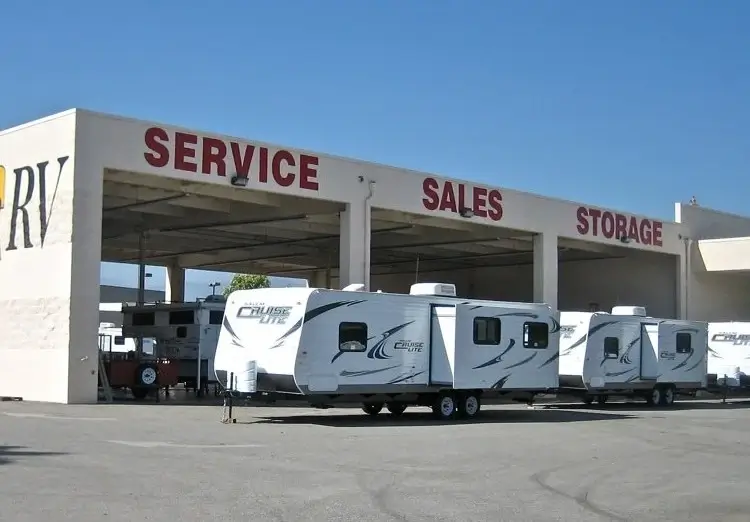
Source: iStock (Flickr)
Remember that new RVs come with manufacturer warranties and cleaner maintenance histories. Plus, you’ll still have support from your RV dealer if something breaks early on, and you’re more likely to have the latest layouts, solar outfitting, and tech upgrades too.
On the other hand, used RVs can be a serious bargain — if you know what you’re looking at. Resale prices vary dramatically, and some models hold value better than others. But be prepared to do your due diligence, asking for service records and proof of routine maintenance, checking for water damage, and even budgeting for surprise repairs. If you’re not careful, that “cheap” rig might need new tires, new seals, and a deep clean before it’s road-ready.
What’s the sweet spot? Many buyers aim for lightly used RVs in the 2–4 years old range. At this age, rigs will already have taken the biggest hit in depreciation, but they’ll still feel relatively fresh under the hood.
The Factors That Affect RV Prices
There’s no single formula for RV costs. Instead, there are a handful of key factors that consistently push the number up or down.
Let’s run through the biggest players.
The RV’s Type
We basically already covered this, but it warrants re-mentioning as it is THE biggest factor in RV costs by far. Different RV types come with different cost baselines. Motorhomes are generally pricier than towables, and big motorcoaches (including even the smallest Class A RVs) top the charts with ease.
My advice is to not sleep on the midrange. The rise of overpriced Class B RVs has seen a wave of more reasonably priced Class Cs, and travel trailers come in such a massive variety that there really is something for everyone. Plus, as mentioned, my fellow budget travelers can still have the OG dirtbag experience by way of teardrops, pop-up campers, and van conversions.
The RV’s Size and Floorplan
Bigger usually means pricier… but it’s not just square footage that matters. How well the space is designed and how well it’s built for full-time RV living also play a huge role in the cost.
Slide-outs add square footage at camp, but they also add mechanical complexity (and cost). Features like convertible dinettes, Murphy beds, or hard-walled bathrooms also tend to raise the price because they reflect more engineering and better materials.
It’s also worth noting that RVs with separate sleeping quarters (e.g., bunkhouses or rear bedrooms) often cost more than studio-style layouts. The same goes for rigs with cleverly used vertical design, ample indoor storage, or premium kitchen setups. Even interior height and insulation levels can subtly affect cost — especially for four-season RV models designed for living through the winter.
The RV’s Status
You’ve heard this one before as well, but it also bears repeating: new rigs cost more upfront. However, they also come with warranty support, dealer servicing, and that fresh-off-the-line peace of mind. Even purchasing an extended warranty or service plan for a new rig will be cheaper (though, annoyingly, your RV insurance costs will be higher).
Used rigs and old RVs? They’re cheaper, but you’ll need to budget for higher maintenance costs and be ready to vet their condition yourself. Age, mileage, and upkeep all influence resale value — especially in private sales.
The RV Brand and Model’s Reputation
Not all RV brands are created equal! And the market knows it.
Airstream, Winnebago, and Lance tend to hold value and command higher prices thanks to time-tested reliability and top-tier construction. Meanwhile, brands like Thor or Forest River often price lower but carry a reputation for cutting corners, particularly in entry-level builds.
That said, it’s not always about the badge. Some older, well-cared-for models (especially pre-2010s and pre-COVID) can outperform newer builds in quality and longevity. And some low-cost brands have standout models that punch above their weight. You just have to read reviews and be willing to scour the market on a per-model basis.
Why does this matter for pricing? Because buyers “know” what a brand is “worth”, whether that reputation is earned or not. That perception feeds into resale value, insurance rates, and the questionable pricing you’ll see on both the lot and Facebook Marketplace. It helps to know what are considered the best RV brands on the market ahead of time so you’re operating from the same baseline.
But then, because you’re a super sexy smarty-pants consumer, you won’t just look at the brand. You’ll look at the model, the year, and what RV owners (not dealers and mainstream outlets) say about both.
The Included Features
The more an RV can do out of the box, the more it’ll cost you. It’s not rocket science, just RV science: built-in features add value. It doesn’t matter whether we’re talking robust boondocking systems or bougie upgrades to pimp out your RV lifestyle.
Factory-installed solar panels, inverters, lithium batteries, and composting toilets all bump up the sticker price, especially in off-grid-ready models. The same goes for residential-style fridges, solid-surface countertops, onboard entertainment systems, or full bathrooms with separate showers.
When buying used, the same logic applies. Any high-value mod — like upgraded suspension, rooftop AC, backup cameras, or even a premium replacement RV mattress — will likely be factored into the asking price. Some sellers overestimate what that adds, while others underplay it.
Either way, you’re paying for more than just a box on wheels. The more turnkey and self-sufficient an RV is on arrival, the higher its cost. But the smoother your RV travels will be too!
Other Market Factors
Righto! The Class A elephant in the room. RVs don’t exist in a vacuum, and neither do their prices.
Firstly, the COVID RV boom completely rewired the market, and it’s just never been the same since. Demand exploded, prices soared, and manufacturers ramped up production… but not always with care.
Many post-2020 rigs were rushed to meet demand, which led to quality control issues and a flood of subpar units still circulating today. A lot of RV dealers are still sitting on overpriced stock from that glut, and private sellers often further base their resale prices on those inflated expectations. Generally speaking, I always recommend looking for pre-2020 RVs or post-2022 (and even then, pre-2020 is better). It’s also key to stay eagle-eyed for anybody — dealer or private — flogging a COVID-era model as a later year model.
Meanwhile, interest in the RV life comes and goes with the economy. When housing feels unaffordable or interest rates spike, more people look to full-time RV living as an alternative. But that same demand also drives prices up, especially in the used market, where the best rigs get snapped up fast.
Finally, seasonality matters as well. Spring and early summer are peak buying seasons, and prices tend to rise accordingly. If you go shopping in fall or winter, you’ll probably score a better deal. (But then, you’ll have to winterize your RV for long-term storage too.)
Long story short: the market’s still finding a reset post-pandemic, and regardless, RV costs are a swinging needle at the best of times. Keep your wits about you, and don’t mistake a trend spike for a fair price.
Ongoing Expenses and the Long-Term Costs of RV Ownership
Buying the RV is just the beginning; this lifestyle is a long-term commitment. Like any home (or vehicle), the long-term costs can creep up, and they’ll vary depending on your rig, travel style, and where you park it.

Let’s talk about how much an RV costs… to keep running:
- RV Insurance: Expect anywhere from $300 to $1,500 per year on the low-end, up to $3000+ for higher-end rigs. Bigger rigs cost more to insure, as do newer, more luxury models (plus full-time RVers pay more in the USA’s insurance regime). Location, driving history, usage, and how many times a day you fart in it will likely all influence your rates as well.
- Financing Costs: Don’t forget these if you’re getting a loan! Those monthly payments stack up fast, and that’s before you consider any fees like origination, documentation, and setup costs. (Plus the sales tax — the fun never stops!)
- Maintenance and Repairs: Budget a MINIMUM of $500–$1,000 annually for maintenance. That should cover the basics like oil changes, resealing roofs, minor parts, and more, at least if you’re handling a bunch yourself. Budget more if your rig is older or you’re putting on big miles; for example, a new set of top-of-the-line RV tires can already run you about $2500 or more.
- Fuel Costs: Motorhomes are thirsty lads. Class A rigs can guzzle 6–10 MPG, while Class Bs might sip closer to 15–20 MPG. One way to save money is to consider the fuel efficiency of a model when buying an RV. But all the same, you should also factor fuel mileage into the cost considerations.
- Campsites and Hookups: Campsite rental can range anywhere from $0 for free BLM camping to $100+ per night for upscale RV parks. On average, most campsites with RV-friendly accommodations charge in the $20–$50 per night range.
- Storage Fees: This is less about your internal RV storage and more about where you store your rig. If you’re not parking your RV at home, monthly storage costs can run anywhere between $30–$250, depending on the location, size, and whether it’s covered or indoor.
Put short, before you fully embrace that RV purchase, plan for the long haul. And the long bill!
Make Full-Time RV Living Cheaper: Spend More Upfront, Save Money Later
RVs are, by definition, one of the areas where cheap now usually means expensive later. If you’re serious about full-timing or long-term use, it’s generally smarter to pony up early and save on the back end.
That could mean buying a new RV with a factory warranty, so you’re covered for the first few years and not living out of a shop every other month. Or it might mean spending extra on a trusted, older model with a legendary rep for reliability and longevity. Some of those pre-2010s rigs will likely outlive even the sun.

You can also prep hard for boondocking. What is boondocking? A damn good way to save money on the road!
Boondocking is essentially trading dedicated campsites for unpowered national parks, Walmart parking lots, and the middle of fumbuck nowhere.) You can actually save big on camp costs and RV park fees by going all-in on features like solar, lithium batteries, and big water tanks, and then just going off-grid for longer.
And don’t underestimate the relationship between better build quality and product lifespan either. A more expensive rig built with quality materials will age better, hold value longer, and cost less to maintain, all of which keeps you on the road longer.
Trust me: paying more upfront is way better than being a sucker to planned obsolescence and having to offload a lemon in 3–5 years.
Finding the Right RV for the Right Price: Tips for Prospective Buyers
And here are a few purchasing tips, just in case you’ve stumbled across this article while scoping out how much an RV costs to buy. Scoring the right rig at the right price takes more than scrolling classifieds and hoping for the best.

Here’s how to sharpen your buyer brain:
- Watch the seasons: Prices tend to spike in spring and early summer when everyone’s hankering for warm weekends outdoors. But late fall and winter? That’s when the best deals come out to play.
- Look at resale values: Some RVs drop hard in value, even just on last year’s models. Other options — like Airstreams or well-kept Class B vans — hold value better and may be worth the higher upfront cost, particularly if you think you’ll resell later.
- Compare RV dealers with private sellers: Dealers offer warranties and peace of mind, but private sellers usually give you more room to negotiate and wear less cologne. Just know what you’re getting out of either option because it tends to be more of a sidegrade either way.
- Be ready to walk: Desperate buyers overpay. If something feels off or overpriced, just walk. It’s equally good to know how to negotiate for an RV as it is to smell out when it’s time to bounce. Maybe you’ll get a better offer, or maybe another deal will come along — either way, you win.
- Stalk listings, not just shop: Watch your local market or RV listing sites for a while. You’ll learn what’s overpriced, what’s fair, and how long certain rigs tend to sit unsold.
- Search nationwide if you can tow or travel: Sometimes driving a few states over can save you thousands, especially if you’re shopping in a down-season market. Jack up that search radius and see what you can find!
Still Unsure? Try Renting an RV First!
Let’s talk RV renting. I’m a big fan of the ‘try before you buy’ model! Before you buy a rig, rent one and take it for a proper spin: you’ll get a feel for the lifestyle and see what size, type, and layout actually suits you out in the wild.
Platforms designed for renting an RV, such as Outdoorsy orRVshare, give you all kinds of options from compact vans to fifth wheels. They’re nearly always from private owners. It’s essentially like Airbnb for RVs, with plenty of filtering options, which means you might get the chance to rent the exact model you’re considering buying.

In terms of rental costs, expect to pay around $100–$250 per night, depending on the type of RV, the season, and its location. That may sound steep, but it’s a small investment compared to buying something that turns out to be totally wrong for your needs.
If you really want to test out the lifestyle, you can often get significantly better prices by renting the RV for a month or more. Plus, that way, you can really get a sneak peek at real-world on-the-road costs. It’s the ultimate test drive — and one that might just save you thousands.
FAQs about RV Purchasing Costs
Still crunching the numbers? Aren’t we all…
Here are a few common questions that pop up when you’re weighing up RV costs and all the variables involved.
Is it financially smart to buy an RV?
It can be… But only if you’re clear on what you’re really buying. For full-timers or frequent travelers, an RV is often cheaper than rent or flights or hotels, especially with smart route planning and boondocking. But all the same, RVs are depreciating assets with maintenance needs, storage costs, and insurance bills.
You’re not buying an investment, and don’t give a moment’s thought to anyone who says you are. You’re buying a lifestyle vehicle. It’s only “financially” smart if you’re building an alternative life around leveraging the tool, maybe RV living on private property (and even then, I’d say move to Mexico). Overall, buying an RV is mostly just lifestyle smart.
What is the cheapest RV you can buy?
The cheapest RVs are usually towables — especially used teardrop campers, pop-ups, and ultra-light travel trailers. You can find basic used units for as low as $3,000–$7,000 if you’re handy and willing to put in some elbow grease.
Among motorhomes, the cheapest are older Class B vans or compact Class C RVs, though you’re unlikely to snag anything reliable under $20,000. That said, technically, a used cargo trailer conversion or a budget DIY camper van could get you rolling even cheaper… But those aren’t always turnkey or road-legal (except in Mexico!).
How expensive is a good RV?
That depends on what you mean by “good”. If we’re talking safe, well-built, reasonably comfortable, and road-trip-ready, then a “good” used travel trailer might run $15,000–$25,000. A solid, entry-to-mid-level motorhome or fifth wheel will typically land in the $40,000–$90,000 range. Meanwhile, premium, new rigs with luxury features like Class As easily break six figures.
The key is to match “good” to your actual needs — not the dream of #RVlife. A rig that’s too big, too fragile, or too feature-packed for your budget becomes a money hole very quickly.
What time of year is it cheapest to buy an RV?
The best time to buy an RV in the US is usually late fall through winter, from October to February. That’s when demand dips, dealerships need to clear stock, and private sellers are more open to negotiation.
Globally, similar seasonal trends hold in places with defined winters, such as Canada, Europe, and parts of Australia. In milder climates, market slowdowns can still happen post-summer, but they’re less dramatic. But all in all, wherever you’re shopping, off-season equals leverage.
How Much Does it Cost to Buy an RV? The Final Answer
Final answer? Check the tables at the start of the article!
I apologise if that’s a cop-out, and I do sincerely appreciate you reading this far. But if this article has taught you anything, it’s that RV prices swing more than Pennsylvania! From RV classes to age to how much shag carpet the previous owner installed, there’s a lot that goes into the cost of purchase. (Pro-tip: find second-hand RVs that tanked their resale value with shag carpet, then rip it all up — teehee.)
But what you’ve read in this article is a detailed breakdown of basically every factor you need to consider when looking at the costs. By now, you know the secret:
- Shop for what suits your needs.
- Watch markets, read reviews on the model, understand if the COVID production timeline affected it, and even rent one as a test drive.
- Decide if new or used is the way to go.
- And then, play to seasonality. Buy it in off-season, lock it down for storage, spend the winter dreaming up your ultimate road trip, and then dewinterize your RV come spring and get adventuring!
If I’ve missed anything in the fine details of this analysis, please do leave a comment below — genuinely. I won’t pretend to be a financial expert; I’m just a nerd for the nitty-gritties. Everybody’s two cents is valid for that!
But above all, have fun out there. Find your perfect ride, and then nab it for the perfect price. Remember that reliability and quality are far more important than worrying about asking prices. Because when you’re on Year 15 of ownership of your warhorse that just never seems to die, you won’t be thinking about how much you paid for it…
You’ll be thinking about the last 15 years of actual goddamn living you just did, even with all the speedbumps along the way.

